

They Understand More Than You Think
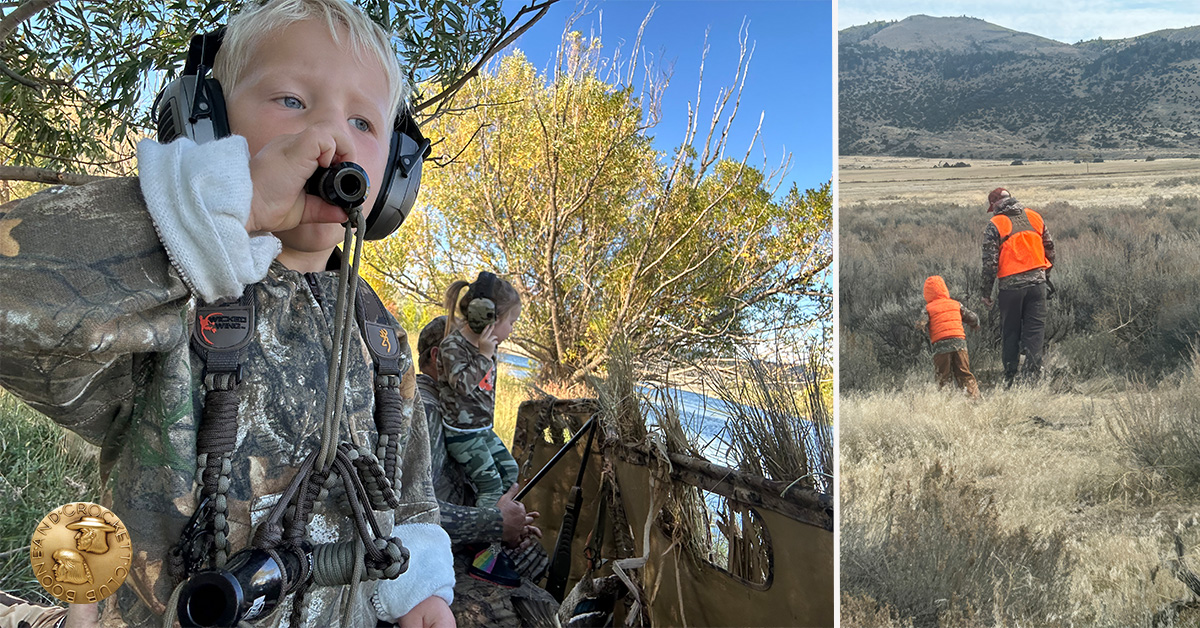
Getting kids involved at an early age teaches ethical lessons for years to come.
By Chad Carman, photos courtesy of the author
The first time I took Graham hunting, he was barely two years old—small enough that the goal was to keep him warm, feed him well, and let him have fun. There was nothing quiet or serious about that duck hunt. He talked nonstop, dropped things in the blind, blew my duck calls like kazoos, and made more noise than any waterfowler would tolerate. It didn’t matter. At that age, the goal wasn’t success. The goal was exposure, to let him see the decoys, hopefully hear wings overhead, see our dog Bella retrieve a bird, and be part of something that mattered to me. Comically enough, we nearly shot our limit that afternoon.
It’s clear to me that ethics aren’t something you sit a kid down and formally teach. They don’t respond to lectures or principles or long explanations about fair chase.
I didn’t expect him to understand anything about rules or ethics. He was too young to know why certain ducks are legal or why we pass on others. My goal was simply to include him. All he knew was that there were birds in front of us and that, in his mind, the obvious next step was to shoot them. For a while, every time we spotted a bird or a deer or an elk, he’d point and ask, “Can we shoot it?” It became the recurring question of every hunt, hike, and car ride. But every time he asked, I chuckled and explained when we can and when we can’t, even if the explanations feel far above his age level. I assumed most of it went in one ear and out the other.
During hunting season last year, when he was nearly four, I realized he had absorbed far more than I thought. While waterfowl hunting, he pointed at a group of birds and said, unprompted, “We can’t shoot those ones, right? Those aren’t the ones we’re allowed.” It stopped me because it was the first time he made the connection on his own. It wasn’t species identification, but it was the beginning—the idea that laws and ethics matter, and that not every opportunity is meant to be taken.
Later in the season, I took him on his first deer hunt. The wind was howling hard enough that still-hunting wasn’t realistic with a kid, so we drove roads and glassed. Eventually, we found a group of does feeding in a pocket of sage. Immediately he asked, “Can we shoot it?” and I explained why we couldn’t do anything from the road. We talked about getting out quietly, staying low, and working around the terrain because shooting from a vehicle or roadway isn’t just illegal—it isn’t ethical. He didn’t question any of it. He grabbed his little coat, hopped out, and treated the stalk like it was the most exciting part of the hunt.
We eased along the edge of a cutbank, slipping out of sight, closing the distance because shooting in high wind from too far away doesn’t end well for anyone, especially the deer. When we finally reached a spot where the wind was manageable and the shot was responsible, he whispered, “Now we can?” Not impatient. Just working through the rules he was piecing together. When the deer was down and we walked up together, he was proud, not because of the shot itself, but because he felt involved in the whole process.
It’s clear to me that ethics aren’t something you sit a kid down and formally teach. They don’t respond to lectures or principles or long explanations about fair chase. They respond to consistency. They watch what you do. They hear what you say often enough that it starts to take shape in their minds. Graham is still too young to articulate why certain decisions matter, but he’s already starting to recognize that we don’t shoot everything we see, and that hunting has rules that exist for good reasons.
He’s learning ethics the way kids learn almost everything—through repetition, simple conversations, and watching adults behave the same way every time. These hunts are messy, noisy, unpredictable, and rarely productive, but they’re planting the right seeds. He may not understand fair chase yet, but he’s starting to understand the structure it sits on: knowing the rules, respecting the animals, and slowing down long enough to do things the right way.
That’s all I can ask for at his age. The deeper lessons will come later, but the foundation is already there.