

How Hunters Fared on Ballot Measures in 2024
By Charlie Booher
This fall, when ballots were mailed and voting booths were opened, voters across the United States had an opportunity to participate in wildlife management—even though the ballot box isn’t usually the place for making wildlife policy. Still, hunters and anglers did well this season by working with non-hunters and other allies to defeat bad ideas and advance important priorities. Measures in three states stand out as occasions to celebrate as we reflect on the 2024 election.
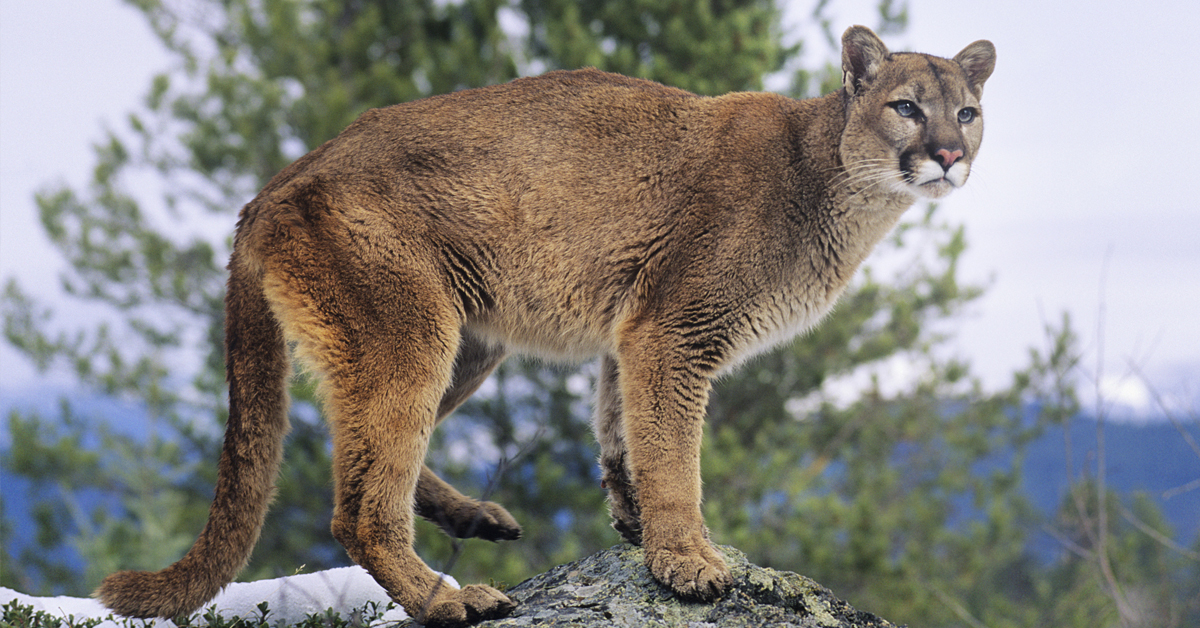
In Colorado, Proposition 127 sought to ban hunting for mountain lions and bobcats. It was firmly rejected—55% no to 45% yes. This ballot measure asked voters in part: “Shall there be a change to the Colorado Revised Statutes concerning a prohibition on the hunting of mountain lions, lynx, and bobcats, and, in connection therewith, prohibiting the intentional killing, wounding, pursuing, entrapping, or discharging or releasing of a deadly weapon at a mountain lion, lynx, or bobcat[?]” The Boone and Crockett Club opposed this measure outright and supported the efforts of Colorado’s Wildlife Deserve Better to defeat it.
Floridians voted by high margins (67%-33%) to add the right to hunt and fish to their state constitution, becoming the 24th state in the country to do so. Florida’s Constitution will now include language that reads in part: “Fishing, hunting, and the taking of fish and wildlife, including by the use of traditional methods, shall be preserved forever as a public right and preferred means of responsibly managing and controlling fish and wildlife.”
And Minnesotans reaffirmed their Environment and Natural Resources Trust Fund, which applies state lottery funds to the “public purpose of protection, conservation, preservation, and enhancement of the state's air, water, land, fish, wildlife, and other natural resources." This fund was first added to the state constitution in 1988 via a similar ballot initiative and has since invested more than $1 billion into more than 1,600 projects across the state.
Ballot measures allow voters to directly decide on specific issues, bypassing the legislative and regulatory processes. Ballot measures aren’t all bad, but they aren’t always the best way to make wildlife policy. As stated in a Club press release when Colorado’s Proposition 127 made the ballot, “The Boone and Crockett Club believes it is unwise to make complex wildlife management decisions through popular vote, rather than relying on the expertise of professional wildlife managers and thoughtful review by appointed boards or commissions. Effective wildlife management requires a nuanced understanding of ecological systems, something that is often lost in emotionally charged public debates and in public relations campaigns that oversimplify the conversation.”
“We hold it to be self-evident that all wildlife in Colorado is best protected, enhanced, and managed via the science-based wildlife professionals employed by the State of Colorado for such purposes.”
On these types of issues, there are especially large portions of undecided voters—because many voters don’t think, or have to think, about issues impacting wildlife or wild places unless confronted with a choice that forces them to do so. These are exactly the people we need to reach with the most compelling message to ensure our ability to hunt is maintained.
During the latest election in Colorado, voters affirmed that science-based wildlife management is the best way to manage wildlife. As a result, Coloradans still have both a legal and a social license to pursue mountain lions and bobcats. Message testing before the campaign and election revealed what many know: wildlife science ought to be the basis for management decisions. Likewise, the respective ballot initiative campaigns in Florida and Minnesota experienced such great success because they reached an extraordinary number of voters with the most resonant and compelling messages possible.
In considering the troubling substantive trends of recent ballot measures, including this latest attempt to ban cat hunting and an earlier proposition that successfully directed the state wildlife agency to reintroduce wolves to Colorado, the Colorado Wildlife Employees Protective Association, a group of professional state agency employees, issued a first-of-its-kind resolution that reads in part: “[We] hold it to be self-evident that all wildlife in Colorado is best protected, enhanced, and managed via the science-based wildlife professionals employed by the State of Colorado for such purposes.”
However, ballot measures targeted at certain forms of hunting, shooting, fishing, or trapping are not new. In the last decade of the 20th century, numerous measures targeted hunts ranging from the pursuit of bears with hounds to regulated mourning dove seasons. Some of these prevailed, and these privileges have been gone ever since. Other anti-hunting ballot measures were defeated, but may well return.
We must continue to innovate, both within and without the government, to appeal to a broader populace. Hunters have done this before, notably in developing and advancing our own Fair Chase hunting ethics, and we can do this again.
Growing uncertainty in natural resource governance requires us to adapt to the world around us as leaders in this field. Ballot measures require us to coordinate ourselves in ways that we never have before, and we must rise to the challenges that lie immediately before us and those primed for the decades to come. As we look to the future, it’s likely these matters will increasingly be up to us to decide. Beyond our community’s own polling, ballot measures are perhaps the closest measure for aligning the law with our social license—or overall social acceptability—of certain activities. The reality is that what we know as ballot box biology is part of a larger trend that pits classically trained experts and innovators against the core principles of democracy.
The members of the Boone and Crockett Club and our partners are working hard toward our mission to “promote the conservation and management of wildlife, especially big game, and its habitat, to preserve and encourage hunting and to maintain the highest ethical standards of fair chase and sportsmanship in North America,”—be it in the field, in the halls of Congress, or at the ballot box.